



29.01.2026

Charging company cars at home: billing from 2026 – what companies and employees need to know

The tax rules for charging company cars at home and the associated billing will be reformed in Germany from January 1, 2026. Until now, employers have been able to reimburse flat rates when employees have charged their company cars at home – this practice will now come to an end.

Charging company cars at home: billing from 2026 – what companies and employees need to know

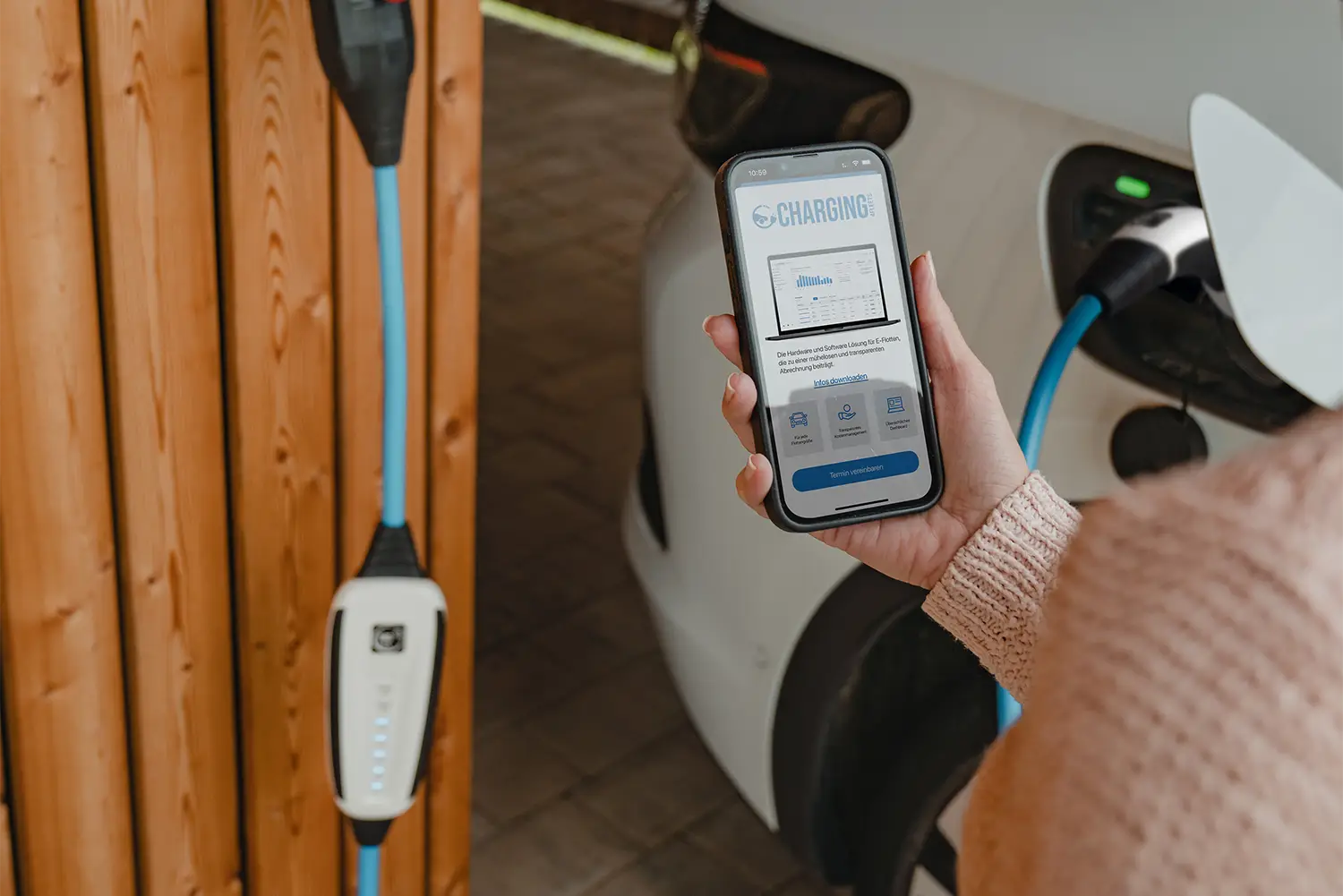
Charging4Fleets on the NRGkick app

In this article, we explain what is changing in the billing of electric company cars when charging at home, what proof will be required in the future, what options are available for employers, and how you can now set up your fleet to be legally compliant.

Why the reform on billing for company cars charged at home is important

With the new guidelines from the German Federal Ministry of Finance, the tax exemption for charging costs is more closely tied to an actual and verifiable recording of the energy charged.


The reform mainly affects:

  • Employers with electric or hybrid company car fleets
  • Employees who charge their company car at home and get the charging costs reimbursed by the employer
  • HR & Accounting that need to adapt billing processes
  • IT and infrastructure managers who need to provide verification solutions

Abolition of flat rates – what will change as of 2026

Up to and including 2025, employers were able to reimburse flat-rate amounts for electricity charged at home tax-free—without detailed proof of consumption. This simplification will be eliminated at the turn of the year.

Flat rates no longer applyThe previous monthly flat rates for charging electricity will be discontinued without replacement as of January 1, 2026.

Proof becomes mandatoryTax-free reimbursement is only possible if the actually charged kilowatt-hours (kWh) are proven and documented.
For example via:

    • Wallboxes with integrated electricity meter
    • Mobile measuring devices
    • In-vehicle fuel consumption tracking (if applicable)


No more estimatesEstimates or self-prepared vouchers without a meter are not permitted.

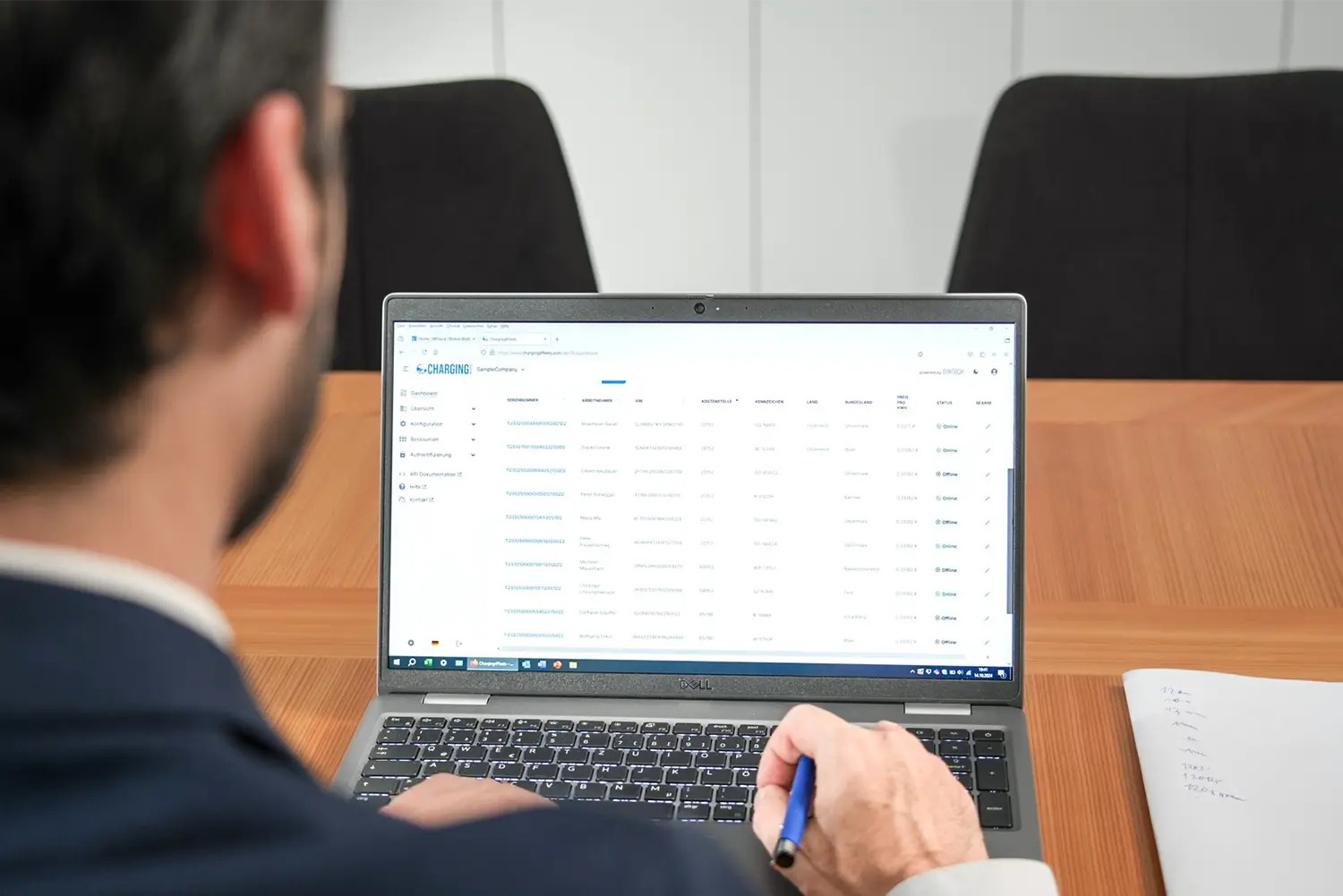
Fleet billing with the Charging4Fleets portal

How company car accounting will work in the future

Usage-based billing

Billing must be based on exact consumption:

  • Employers reimburse employees for the actual electricity costs based on the charged kWh.
  • The documentation must be traceable and verifiable (e.g., through digital measurement data).


Electricity price flat rate as an alternative

If determining individual electricity costs is difficult (e.g., with dynamic electricity tariffs or PV use), the BMF allows a uniform electricity price flat rate per kWh as a basis for calculation.

Special features of dynamic tariffs & photovoltaics

Practical exemptions apply to companies and employees who use electricity tariffs with variable prices or self-generated electricity from a PV system. 

Average values permitted:
For dynamic tariffs, an average electricity price can be applied instead of billing by the minute.

PV usage remains possible:
Electricity from a private PV system can still be included in company car billing if the chosen billing model is documented in a comprehensible manner. A fixed electricity price can be applied or a monthly averaged price can be used.

Practical implications for businesses

Adjustment of the car policy

Companies must review their existing reimbursement models and adapt them to the new requirements.


Implement technical verification solutions

The use of:

  • Wallboxes with internal meters
  • digital measurement and reporting tools
  • automated billing solutions

is becoming increasingly necessary for legally compliant company car accounting.


Digital documentation

Manual billing via Excel or paper receipts is becoming increasingly impractical due to stricter requirements. Digital systems make verification, archiving, and auditing easier.

Benefits of the new billing practice

Although the legal requirements are increasing, benefits are also emerging:

More transparency: Every charged kWh is recorded precisely – no more flat rates that could distort costs.

Fairer billing: Employees are reimbursed only for actually charged energy.

Better predictability: Standardized documentation reduces the risk of tax or business audits.

Solution for the new requirements: NRGkick & Charging4Fleets

The new legal requirements starting in 2026 make one thing clear: Without transparent, metered, and digital solutions, the billing of company cars charged at home will become significantly more complex. This is precisely where NRGkick and Charging4Fleets as an integrated fleet charging solution.

NRGkick enables the precise recording of charged energy – regardless of whether the company car is charged at home, at work, or on the go. In combination with Charging4Fleets, the relevant charging data is automatically collected, processed, and made usable for company car billing. This creates a reliable basis for the consumption-accurate reimbursement of charging costs in accordance with the new legal regulations.

Implementing home charging billing easily and legally compliant

Charging4Fleets significantly simplifies wallbox and home charging billing for company cars, in particular.
The solution supports companies in,

  • automatically record the actually charged kWh
  • To document home charging transparently
  • to centrally provide billing-relevant data
  • reduce manual processes and error sources

This is how employers can legally implement the billing for company cars charged at home – without flat rates, without estimates, and without additional administrative effort for employees or accounting.

Scalable for growing e-fleets

Especially for companies with multiple electric company cars, a scalable solution is crucial. NRGkick and Charging4Fleets are designed to be used from a single company car to a large corporate fleet. New vehicles, users, or charging points can be integrated flexibly – ideal for companies that want to expand their e-mobility strategy long-term.

FAQ: Frequently asked questions about billing for home charging of company cars

Does the charging solution need a calibrated meter?

We recommend charging solutions that already include a separate, readable energy meter. However, a calibrated/MID meter is not a legal requirement. NRGkick features a highly accurate built-in energy meter (maximum deviation ± 1 %) that is tamper-proof and cannot be reset. This ensures that accurate and reliable charging data serves as the basis for billing.

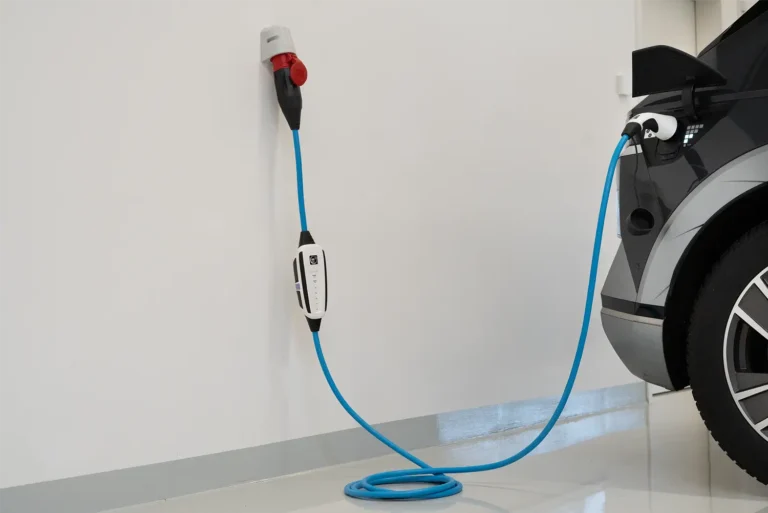
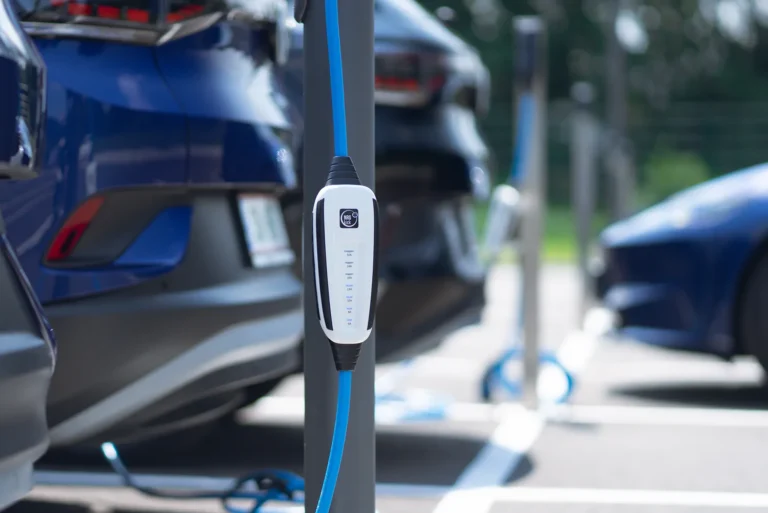
An electric car being charged with NRGkick

Conclusion: An incentive for the efficient billing of home charging for the company fleet

The new rules for billing company car home charging starting in 2026 will bring more transparency, but will also present companies with new organizational and technical challenges. Flat rates are a thing of the past – instead, exact measurement, clean documentation, and digital billing solutions are required.


Companies that act early can use this transition as an opportunity: for clear processes, fair cost distribution, and future-proof company car billing. With solutions like NRGkick and Charging4Fleets home charging of company electric cars can not only be billed in compliance with the law, but also integrated efficiently and scalably into existing fleet processes.

Share post:

Discover Charging4Fleets by NRGkick

Make charging and billing company cars at home simple, transparent and efficient - with the complete solution from NRGkick.

You may also be interested in

Discover more articles

Questions, or just curious?

Your direct line to NRGkick.

Got a question?

FAQ & Support

Find answers to frequently asked questions on our FAQ page or contact our support team directly for individual assistance. Whether it's product details or technical problems - we're happy to help you.

Always up to date!

Newsletter

* Information required

Please select all channels on which you would like to hear from DiniTech GmbH:

Consent for marketing purposes

You can unsubscribe at any time using the link in the footer of our emails.
We use Mailchimp as our newsletter platform. By registering, you agree that your data will be transmitted to Mailchimp for processing.
Learn more about the privacy policy of Mailchimp.